
Docker Image
Learn about Docker Image in Parseable, including core concepts, configuration steps, and practical guidance for building an effective observability workflow.
Ensure Docker is installed on your machine. Refer to this doc to install Docker.
Start Parseable
docker run -p 8000:8000 \
-p 8001:8001 \
-p 8002:8002 \
-v /tmp/parseable/data:/parseable/data \
-v /tmp/parseable/staging:/parseable/staging \
-e P_FS_DIR=/parseable/data \
-e P_STAGING_DIR=/parseable/staging \
quay.io/parseablehq/parseable:latest \
parseable local-store
This will start Parseable on port 8000. You can access the Parseable Console at http://localhost:8000.
Ingest data
You can post log data to the demo dataset using a POST call to the dataset endpoint.
curl --location --request POST \
'http://localhost:8000/api/v1/ingest' \
--header 'X-P-Stream: demo' \
--header 'Authorization: Basic YWRtaW46YWRtaW4=' \
--header 'Content-Type: application/json' \
--data-raw '[
    {
        "id": "434a5f5e-2f5f-11ed-a261-0242ac120002",
        "datetime": "2023-01-05T07:20:50.52Z",
        "host": "153.10.110.81",
        "user-identifier": "Mozilla/5.0 (Windows NT 6.1; Win64; x64) Firefox/64.0",
        "method": "PUT",
        "status": 500,
        "referrer": "http://www.google.com/"
    }
]'
Parseable uses datasets to organize log data. Here we posted a sample log data to the demo dataset, by adding the header X-P-Stream: demo in the request.
Query data
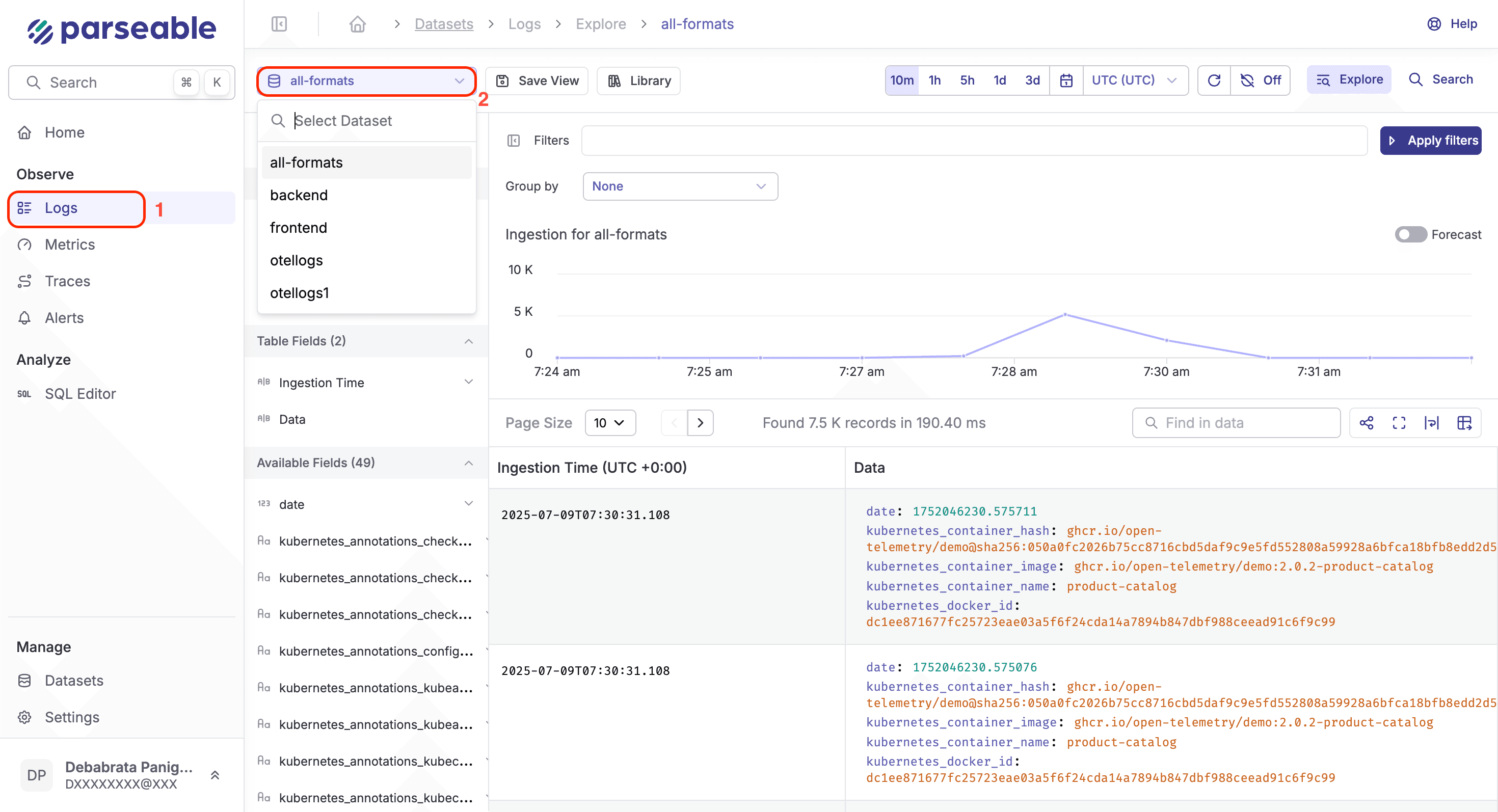
To query the data via Console, login at http://localhost:8000. Default username and password is admin:admin. Then select the demo dataset under the log explorer page.
Was this page helpful?